
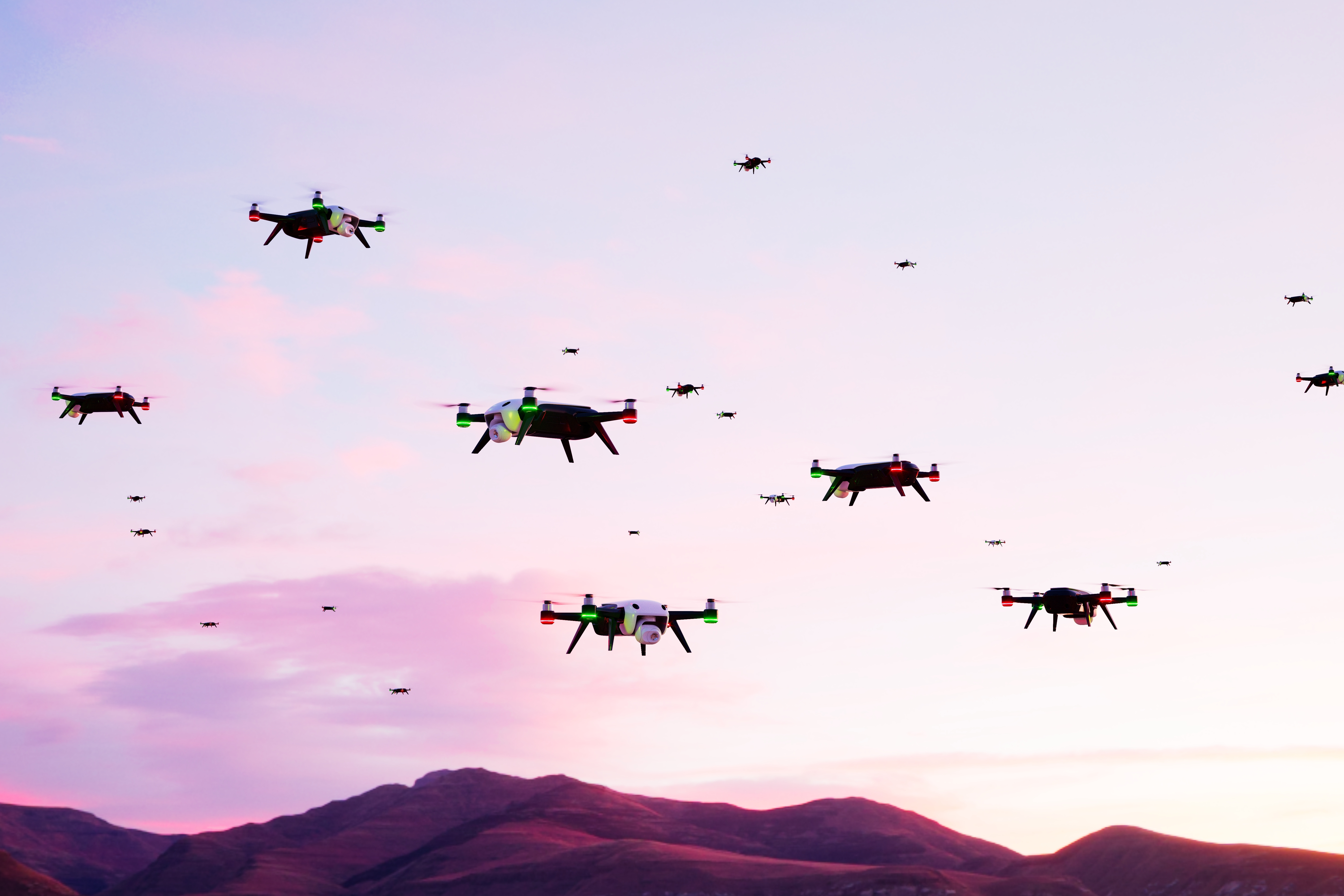
Over the past decade, the United States has moved from experimental integration of unmanned aircraft systems (UAS) toward a structured regulatory framework designed to support routine operations in the National Airspace System (NAS). This transition reflects both the rapid proliferation of drones across commercial, recreational, and public safety sectors and the Federal Aviation Administration’s ongoing effort to balance innovation with the safety and security of shared airspace.
The current U.S. regulatory architecture for civil drones rests primarily on three interrelated components within Title 14 of the Code of Federal Regulations: Part 107, Part 89, and the proposed Part 108. Together, these rules form a layered governance model addressing how drones operate, how they are identified, and how more advanced operations may be scaled in the future.
Part 107: Establishing the Foundation for Civil Drone Operations
Adopted in 2016, 14 C.F.R. Part 107 established the first comprehensive regulatory framework for routine small unmanned aircraft operations in the United States. The rule applies primarily to civil drones weighing less than 55 pounds and introduced standardized requirements for operator certification, aircraft registration, and operational limitations.
Part 107 reflects the FAA’s deliberately cautious approach to integrating a new aviation technology into a safety-critical system. The rule imposes core operational limits—including altitude restrictions, speed limits, and the requirement that the aircraft remain within the visual line of sight (VLOS) of the remote pilot or visual observer. Operators must hold a Remote Pilot Certificate, and the Remote Pilot in Command (RPIC) is assigned ultimate responsibility for the safety of each flight.
While these restrictions limit some advanced commercial applications, they also provided the first predictable legal pathway for widespread drone use. As a result, drones have become common tools across sectors ranging from agriculture and infrastructure inspection to filmmaking and emergency response.
Importantly, Part 107 also introduced a waiver system, allowing operators to conduct certain higher-risk operations—such as flying beyond visual line of sight—if they could demonstrate that the operation could be conducted safely. This mechanism enabled experimentation and technological development while maintaining regulatory oversight.
Part 89: Building Accountability Through Remote Identification
As drone operations expanded, regulators faced a growing challenge: aircraft operating in the airspace could often not be easily identified or traced to a responsible operator. 14 C.F.R. Part 89, commonly known as the Remote Identification (Remote ID) rule, addresses this accountability gap.
Remote ID requires most drones operating in U.S. airspace to broadcast identifying information during flight, including the aircraft’s serial number or session identifier, location, altitude, velocity, and the location of the control station. In effect, Remote ID functions as a digital license plate for drones.
This capability enables law enforcement and aviation authorities to identify aircraft and their operators in real time, improving both safety and regulatory enforcement. The rule also supports the long-term integration of drones into the airspace by enabling more sophisticated traffic management systems and improving situational awareness for other airspace users.
Part 89 recognizes several compliance pathways, including drones manufactured with built-in Remote ID capabilities, retrofitted broadcast modules for legacy aircraft, and operations conducted within FAA-Recognized Identification Areas (FRIAs) for certain community-based or educational activities.
Toward Scalable Operations: The Proposed Part 108 Framework
While Parts 107 and 89 provide the operational and identification foundations for drone use, many high-value applications—such as long-distance infrastructure inspection, large-scale agricultural operations, and package delivery—require aircraft to operate beyond visual line of sight (BVLOS). These operations are currently authorized largely through individualized waivers, a process that is resource-intensive and difficult to scale.
To address this limitation, the FAA has proposed 14 C.F.R. Part 108, a new regulatory framework designed to normalize routine BVLOS operations. The proposal represents a significant shift in regulatory philosophy. Whereas Part 107 focuses on individual pilots operating relatively small aircraft, Part 108 would emphasize organizational accountability and system-level safety management.
Under the proposed framework, operators could obtain either operating permits or operating certificates, depending on the complexity and risk level of their operations. This approach mirrors elements of traditional aviation regulation by placing responsibility not only on individual pilots but also on organizations that manage fleets, personnel, and operational procedures.
The proposed rule also anticipates the development of new digital infrastructure for managing dense drone traffic, including the use of automated service providers and unmanned traffic management systems. These tools are expected to play a critical role in enabling high-volume drone operations while maintaining the safety of the broader airspace.
A Layered Approach to Integration
Taken together, Parts 107 and 89—along with the proposed Part 108—illustrate the FAA’s incremental strategy for integrating unmanned aircraft into the national airspace. Rather than attempting to solve all regulatory challenges at once, the agency has adopted a layered approach:
- Part 107 establishes baseline operational rules and pilot responsibilities.
- Part 89 provides the accountability and identification mechanisms needed for enforcement and situational awareness.
- Part 108, if adopted, would enable the scalable, beyond-line-of-sight operations necessary for the next phase of commercial drone development.
This evolving regulatory framework reflects the broader challenge facing policymakers: how to foster innovation in a rapidly advancing technology sector while maintaining the safety, security, and reliability of one of the world’s most complex aviation systems.
As drone technologies continue to advance and their applications expand, the United States is steadily transitioning from an era of experimental integration to one of normalized, routine unmanned aviation operations.
Leave a Reply